Ministério Veredas Do IDE
  • Home
  • ConfiraHOT
  • Devocional Diário
  • Motivacional
  • Perguntas e Respostas
  • English
    • English
    • Español
    • Português
Ministério Veredas Do IDE
  • Home
  • ConfiraHOT
  • Devocional Diário
  • Motivacional
  • Perguntas e Respostas
  • English
    • English
    • Español
    • Português
Subscribe
Ministério Veredas Do IDE
  • Home
  • ConfiraHOT
  • Devocional Diário
  • Motivacional
  • Perguntas e Respostas
  • English
    • English
    • Español
    • Português

Copyright 2021 - All Right Reserved. Designed and Developed by PenciDesign

Biblical Studies

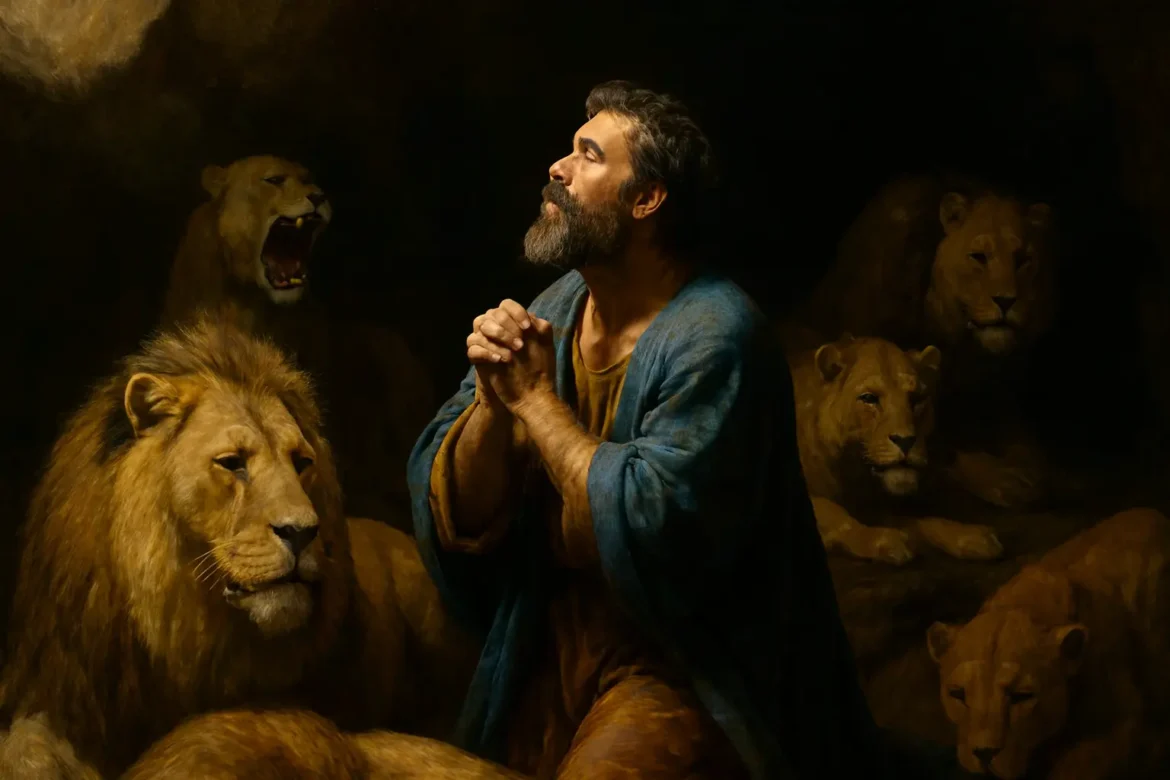
Daniel in the Lions’ Den: Lessons of Faith and Integrity

by Ministério Veredas Do IDE November 9, 2025
written by Ministério Veredas Do IDE

The Organization of the Kingdom and Daniel’s Distinction

King Darius divided the kingdom into 120 provinces and appointed a high official to govern each one of them. In addition, he selected Daniel and two other men as administrators to oversee the high officials and protect the king’s interests.

We can see that Daniel quickly stood out with superior ability compared to all the other managers and high officials. Due to the ability that Daniel demonstrated, King Darius considered placing him as leader over the entire kingdom. Daniel possessed extraordinary intelligence because of his “excellent spirit.”

Then this Daniel distinguished himself above the governors and satraps, because an excellent spirit was in him; and the king gave thought to setting him over the whole realm. (Daniel 6:3, NKJV)

Envy and the Conspiracy Against Daniel

Daniel’s success aroused envy among the other administrators and high officials. They began to seek possible faults in the way Daniel handled management issues, but they found nothing to criticize or condemn.

Daniel was known for his honesty, great responsibility, and unwavering reliability. The only reason they “managed to accuse him” was because of his close connection with God.

Then these men said, “We shall not find any charge against this Daniel unless we find it against him concerning the law of his God.” (Daniel 6:5, NKJV)

The Crafted Decree and the Cunning Proposal

The administrators, officers, and high officials went to the king with the aim of setting a trap for Daniel. They presented the king with a proposal in which he should issue a decree that had to be strictly followed.

In this decree, for the next 30 days, any person who prayed to God or to anyone except the king should be thrown into the lions’ den.

All the governors of the kingdom, the administrators and satraps, the counselors and advisors, have consulted together to establish a royal statute and to make a firm decree, that whoever petitions any god or man for thirty days, except you, O king, shall be cast into the den of lions. (Daniel 6:7, NKJV

The high officials and officers harbored deep envy toward Daniel, conspiring and plotting against his faithfulness to the law of his God. They all united to persuade the king to issue a decree, knowing that Daniel would not comply with it, and thus the king would be forced to order the death penalty. Daniel’s story teaches us to act with integrity, even in the most difficult situations, without compromising our biblical convictions, for that is how we honor God.

Daniel’s Faithfulness in the Face of Danger

When he learned that the law had been signed, Daniel was not intimidated. Instead, he went home and, as was his custom, knelt in his room with the windows open toward Jerusalem. He used to pray three times a day and express gratitude to his God. Despite the officials’ resistance, they went to Daniel’s house and found him seeking God.

Then these men assembled and found Daniel praying and making supplication before his God. Then they came near and spoke before the king concerning the king’s decree: “Have you not signed a decree that every man who petitions any god or man within thirty days, except you, O king, shall be cast into the den of lions?” The king answered and said, “The thing is true, according to the law of the Medes and Persians, which does not alter.” Then they answered and said before the king, “That Daniel, who is one of the captives from Judah, does not show due regard for you, O king, or for the decree that you have signed, but makes his petition three times a day.” (Daniel 6:11-13, NKJV)

The king was deeply disturbed and sought a way to rescue Daniel. He spent the entire day pondering how to free him from this circumstance. Later that night, his advisors approached and reminded him: “Your Majesty, according to the law of the Medes and Persians, no decree signed by the king can be revoked.”

The Lions’ Den and the King’s Hope

The lions’ den was underground and had an opening at the top, covered by a large stone. This opening, sealed by the king, indicated that no one could access the den without his permission. Due to Daniel’s integrity and exceptional spirit, he was admired by the king, who also respected Daniel’s God. Thus, when the king rigorously applied his decree, he expressed hope that God would deliver Daniel from the lions’ den.

Then, the king ordered Daniel to be arrested and thrown into the lions’ den. He said to Daniel: “May your God, whom you serve so faithfully, rescue you.” Then a stone was brought and placed over the mouth of the den. The king sealed the stone with his ring and with the rings of his nobles, so that no one could free Daniel.

It is interesting to note that the king seemed aware of the deliverance granted by God to Daniel’s three friends in the situation of the fiery furnace.

The king returns to the palace and spends the night fasting. His heart was so saddened that none of the usual entertainments cheered him, and he could not sleep. The next morning, the king hurries to the lions’ den.

And when he came to the den, he cried out with a lamenting voice to Daniel. The king spoke, saying to Daniel, “Daniel, servant of the living God, has your God, whom you serve continually, been able to deliver you from the lions?” Then Daniel said to the king, “O king, live forever! (Daniel 6:20-21, NKJV)

The Miracle and Daniel’s Response

And Daniel explains that God sent an angel who shut the lions’ mouths, protecting him from any harm, because Daniel was considered innocent in God’s eyes. The king is extremely happy and orders Daniel to be pulled from the den, finding him without a single scratch. This miracle happened due to Daniel’s complete trust in God.

Divine Justice and the New Decree

After Daniel was removed from the lions’ den, the king orders that those who falsely accused him be thrown into the den with their families. Then, the king issues a decree.

And the king gave the command, and they brought those men who had accused Daniel, and they cast them into the den of lions—them, their children, and their wives; and the lions overpowered them, and crushed all their bones before they ever came to the bottom of the den. Then King Darius wrote: To all peoples, nations, and languages that dwell in all the earth: Peace be multiplied to you. I make a decree that in every dominion of my kingdom men must tremble and fear before the God of Daniel. For He is the living God, And steadfast forever; His kingdom is the one which shall not be destroyed, And His dominion shall endure to the end. He delivers and rescues, And He works signs and wonders In heaven and on earth, Who has delivered Daniel from the power of the lions. (Daniel 6:24-27, NKJV)

According to the Word of God, Daniel prospered greatly in the kingdom of Darius and during the reign of Cyrus the Persian. Daniel teaches us to stand firm in God, trusting fully in the Lord, even in the face of envy and falsehood directed at us. It is essential to act with integrity and honesty in all the places we frequent, for God is greatly pleased with those who follow these principles. The Bible teaches us that our enemies will not succeed, as seen when the men who tried to harm Daniel were quickly overpowered by the lions.

No weapon formed against you shall prosper, And every tongue which rises against you in judgment You shall condemn. This is the heritage of the servants of the Lord, And their righteousness is from Me,” Says the Lord. (Isaiah 54:17, NKJV)
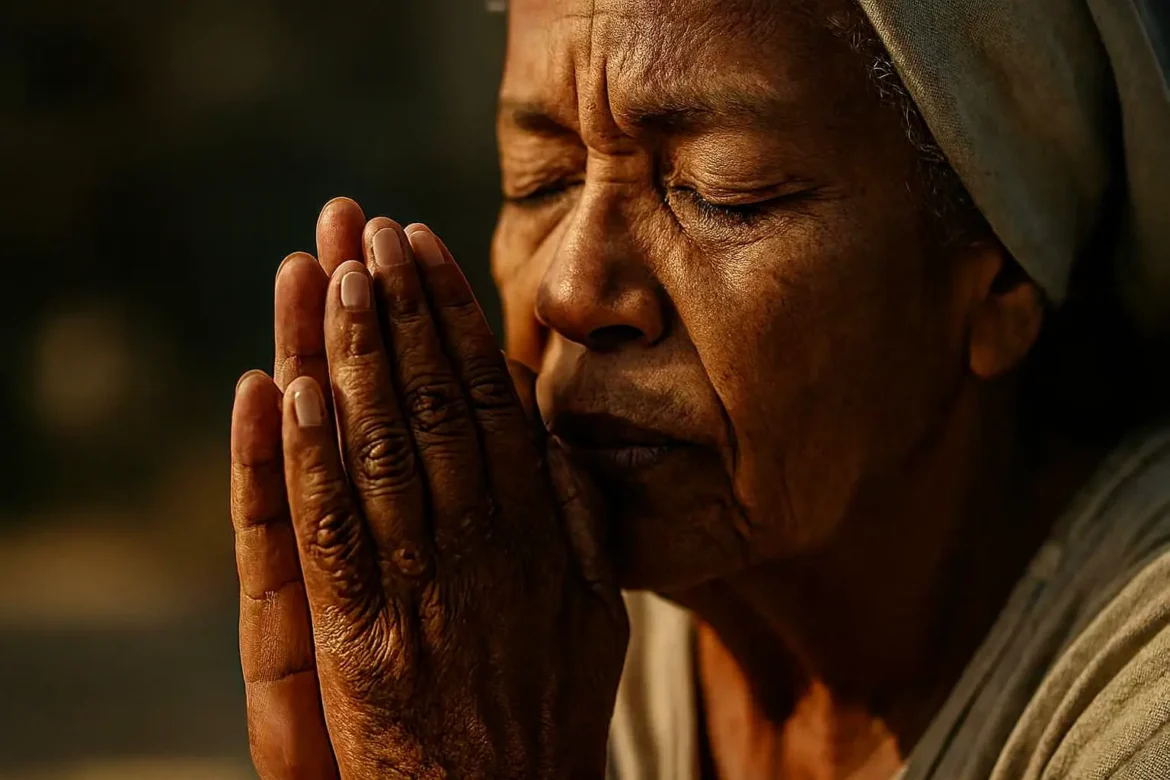

November 9, 2025 0 comments
0 FacebookTwitterPinterestEmail
Biblical Studies

Hebrews 11:1: The Power of Faith

by Ministério Veredas Do IDE November 9, 2025
written by Ministério Veredas Do IDE

Faith! Such a small word, but with gigantic effectiveness, for faith is capable of making impossible things happen.

Through faith, we see nowadays people being healed from illnesses that, in the eyes of medicine, would be impossible.

Faith has the power to transcend what is natural, that is, faith has the power to surpass limits, making everything that was in the invisible realm visible.

Now faith is the substance of things hoped for, the evidence of things not seen. (Hebrews 11:1)

Faith is the assurance of what we hope for and the proof of things we do not yet see. Through faith, our brothers in the past received good testimonies, and they echo to this day.

The Christian is able to understand that the entire universe was created by the word of God. When we observe the gallery of the heroes of faith, we see that faith in a person’s life has the power to accomplish extraordinary things.

What Can Faith Do in a Person’s Life?

By faith, Abel offered to God a more excellent sacrifice than Cain. Through this, he showed himself to be a righteous man, and God approved his offerings. And even after a long time, though dead, he still speaks to this day through his example.

By faith, Enoch was taken to heaven without experiencing death; “he was not found, because God had taken him.” Because, before this event, Enoch dedicated his life to pleasing God.

These and other heroes from the gallery of Hebrews 11 are examples of what faith is capable of doing in a person’s life.

We can mention various illustrious figures of faith, such as Abraham, Sarah, Noah, among others, who, through their faith, even after death, still speak to this day.

And without faith it is impossible to please God, because anyone who comes to him must believe that he exists and that he rewards those who earnestly seek him. (Hebrews 11:6)

This verse makes clear the need to draw closer to God, believing that he exists and that he is ready to attend to everyone who seeks him with all their heart. It is impossible to please God without true faith.

Faith consists in obeying God’s will for our lives. Noah, through faith, built a vessel that would save his family from the flood.

Noah is an example of obedience and faith, for God had warned him about things that had never occurred on earth.

By faith, God, in that scenario, condemned the rest of the world, and Noah received the righteousness that comes through faith.

Many times, God will speak to us about extraordinary things that have never happened before, and it is in that moment that we must put faith into action, that is, trust entirely in God and his purposes.

Faith Accompanied by Works

But someone will say, “You have faith, and I have works. Show me your faith without your works, and I will show you my faith by my works.” (James 2:18)

The Bible teaches us that faith must be accompanied by works; the two must go side by side. In a more didactic way and so that everyone understands.

Imagine that we will speak about God on a cold and rainy night to a homeless person; that is faith.

We need to fulfill this entire verse, which is faith plus works, and what is the work in this moment? We have already used faith, which is speaking about Jesus.

Now, we need to perform the work, which is, on this cold and rainy night, literally sheltering and clothing those who are out in the open.

We understand that faith and works walk together; those who are in the world do need to know the Lord Jesus Christ, but our works must also be manifested in their lives.

Works without faith are dead, just as faith without works is dead faith.

True faith always manifests itself in obedience to God and with compassionate acts toward the needy.

Faith generates obedience within the human being, because we believe in God, and only those who believe in God can truly obey him.

You see that faith was working together with his works, and by works faith was made perfect. (James 2:22)

We understand that James is not saying that faith and works save us, for that would be like separating faith from works. James argues just the opposite; he argues about faith in action.

Faith and works can never be separated, since works proceed naturally from faith.

For in Christ Jesus neither circumcision nor uncircumcision has any value. The only thing that counts is faith expressing itself through love. (Galatians 5:6)

The Bible teaches us that a person is saved by faith:

Namely, the righteousness of God which comes by believing with personal trust and confident reliance on Jesus Christ for all who believe [on Him as Savior]; for there is no distinction. (Romans 3:22)

Paul describes with precision the nature of this faith. A living faith in a living Savior; faith so vital that it cannot fail to express itself in acts motivated by love.

Faith that stops loving and obeying Christ, losing genuine interest in the work of the Kingdom of God and clearly failing to resist sin and the world, is not saving faith.

Consider it pure joy, my brothers and sisters, whenever you face trials of many kinds, because you know that the testing of your faith produces perseverance. (James 1:2-3)

When our faith is tested, perseverance has the opportunity to grow. In the race of faith, the Christian will always be tested by God. The Christian who trusts entirely in God remains persevering and facing the deserts of the Christian walk.

I have told you these things, so that in me you may have peace. In this world you will have trouble. But take heart! I have overcome the world. (John 16:33)

In this world, we will face various afflictions, but Jesus teaches us that only in him will we find true peace. The Lord himself encourages us by saying: “Take heart; I have overcome the world.”

The Lord Jesus teaches us that, just as he renounced sin and lived a life in obedience to God the Father, we too can live a life of faith and obedience to God. And just as he overcame, we too will be able to overcome the world.

Faith is within each of us; the more intimate we are with God, the more we allow him to be the owner of our heart. Certainly, many supernatural things will manifest through the power of faith.

November 9, 2025 0 comments
0 FacebookTwitterPinterestEmail
Biblical Studies

How to Pray?

by Ministério Veredas Do IDE October 28, 2025
written by Ministério Veredas Do IDE

Many wonder: how to pray? First, we must understand that prayer is a request directed to God.

To pray, we need faith, that is, we must be confident that God is attentive to our prayer.

He will regard the prayer of the destitute, and not despise their prayer. (Psalm 102:17)

There are several models that teach us how to pray, and we will describe the simplest ways to talk to God daily.

First Model: The Lord’s Prayer

Our Father which art in heaven, Hallowed be thy name. Thy kingdom come. Thy will be done in earth, as it is in heaven. Give us this day our daily bread. And forgive us our debts, as we forgive our debtors. And lead us not into temptation, but deliver us from evil: For thine is the kingdom, and the power, and the glory, for ever. Amen. (Matthew 6:9-13)

Listen to the Lord’s Prayer and subscribe to our channel. Lord’s Prayer Matthew 6:9

This is the simplest prayer model and also the one that our Lord Jesus Christ left as an example for each of us.

Second Example: A Simple and Personal Prayer

In this second example, we will also use a simple way to talk to God. Where we will express what we desire, as if we were speaking respectfully to a person.

Lord God Almighty, I know I am small, but I come into your grand presence. First, to thank you for everything.

I also come here, O God, to express my needs before you, for I am entirely dependent on your care.

The Lord knows all my needs, as well as my afflictions. Now, I place in your hands my afflictions, needs, my family, my children, and all those around me.

I also ask the Lord to bless my health, my sentimental life, my spiritual life, and do in me, O God, your will and your desire. In the name of Jesus. Amen!

Above, we have a simple example of a prayer, done randomly, that is, when we expose to God all our needs.

Note that this prayer resembles a dialogue with a person, and that is exactly it, for the Holy Spirit of God is gathering all our prayers and taking them to God.

How to Pray If I’ve Never Prayed?

Perhaps you are wondering: how to pray if I’ve never prayed? Talking to God and entering His presence is something simpler than it may seem.

God is not interested in whether you speak beautifully or not, whether your oratory is good or not, but rather, God is interested in hearing the most sincere words from your heart.

If, at the moment you pray, you feel like crying, cry, for God does not resist a broken and contrite heart, and He Himself will wipe away all the tears from our face.

Prayer can be spoken or done in silence, and the more you talk to God, the more intimacy you will have with Him.

Prayer has the power to make illness disappear, people be set free, and make the difficult become possible.

And all things, whatsoever ye shall ask in prayer, believing, ye shall receive. (Matthew 21:22)

October 28, 2025 0 comments
0 FacebookTwitterPinterestEmail
Biblical Studies

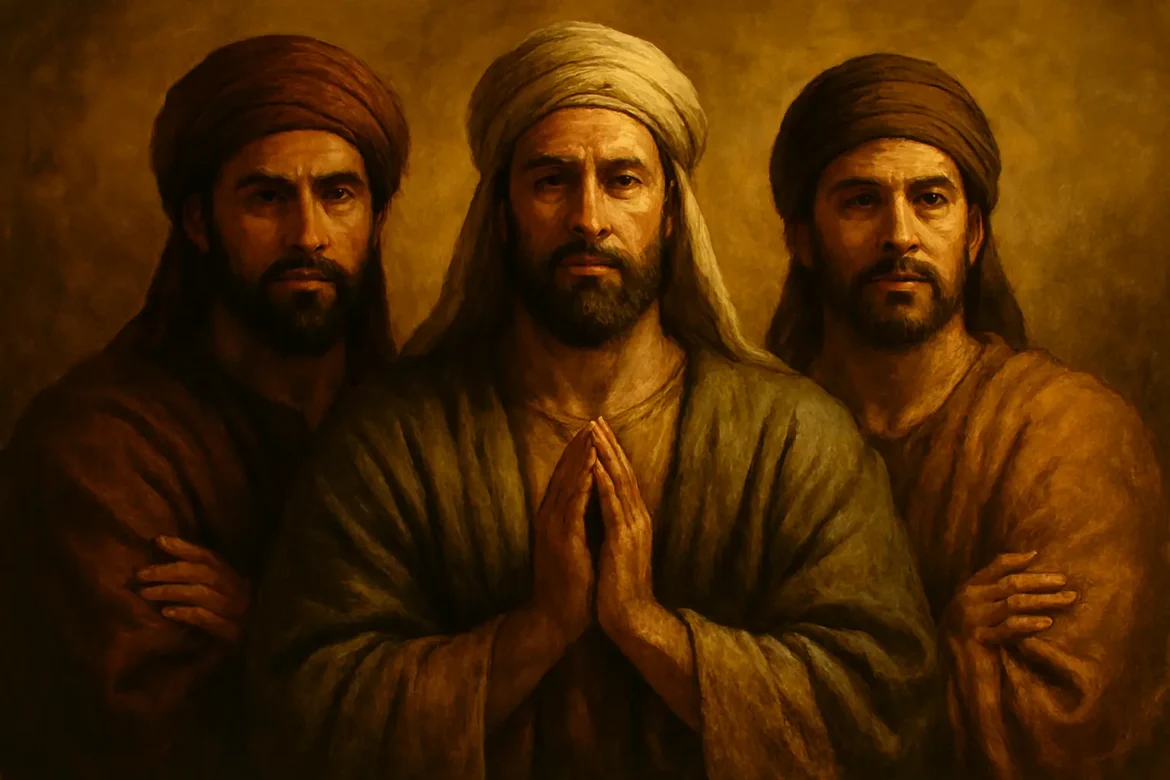
Daniel 3: Shadrach, Meshach, and Abednego in the “Valley of the Shadow of Death”

by Ministério Veredas Do IDE October 28, 2025
written by Ministério Veredas Do IDE

The Connection with Psalm 23

Shadrach, Meshach, and Abednego remind us of Psalm 23:4:

Even though I walk through the valley of the shadow of death, I will fear no evil, for you are with me; your rod and your staff, they comfort me. (Psalm 23:4)

The Golden Statue of Nebuchadnezzar

The story of these three men of God begins when King Nebuchadnezzar makes a golden statue 90 feet high and 9 feet wide and sets it up on the plain of Dura in the province of Babylon.

The king then sends messengers to all the high officials, administrators, governors, advisers, treasurers, judges, magistrates—in short, the message was sent to all the authorities of the provinces—so that they would come to the dedication of the statue that Nebuchadnezzar had set up.

The Bible relates that all these authorities came and stood before the statue that the king had set up.

The Royal Decree and the Order to Worship

At a certain moment, the herald cried out: “Peoples of all races, nations, and languages, hear the king’s order! When you hear the sound of the trumpet, flute, zither, lyre, harp, pipe, and other musical instruments, bow down to the ground to worship the golden statue set up by King Nebuchadnezzar. Whoever does not obey will be thrown immediately into the blazing furnace!”.

King Nebuchadnezzar ordered all peoples, races, nations, and languages that, at the sound of the musical instruments, everyone should bow down and worship the golden statue that he himself had set up.

The Denunciation and the Refusal of the Jews

Some of the astrologers went to the king and denounced the Jews, saying to the king that everyone should bow down and worship the golden image when they heard the sound of the trumpet, flute, zither, lyre, harp, pipe, and other musical instruments.

And what was proposed in this decree was that anyone who did not obey would be thrown into the blazing furnace. Some Jews, Shadrach, Meshach, and Abed-Nego, whom the king had appointed over the province of Babylon, paid no attention to the king’s decree and refused to serve the gods and did not worship the golden statue that the king had set up.

The King’s Fury and the Second Chance

King Nebuchadnezzar became furious and ordered Shadrach, Meshach, and Abed-Nego to be brought before him. When they were brought into the king’s presence, he said to them: “Shadrach, Meshach, and Abed-Nego, is it true that you refuse to serve my gods and to worship the statue I have set up?”.

The king then grants one more chance for the three to bow down and worship the statue he had made. If they refused, they would then be thrown immediately into the blazing furnace.

Nebuchadnezzar did not understand that Shadrach, Meshach, and Abed-Nego served a living God and proposed a challenge to them, saying:

And who is the God who will deliver you out of my hands? (Daniel 3:15)

The Faithful Response in the Valley of the Shadow of Death

Shadrach, Meshach, and Abed-Nego, even while in the “valley of the shadow of death,” respond to the king saying:

We do not need to answer you in this matter. (Daniel 3:16)

These three men of God described here understood that if they were thrown into the blazing fiery furnace, the God they served could indeed deliver them from the king’s hands, as well as from the blazing fiery furnace.

And even if God did not deliver them from the fiery furnace, they would still remain faithful to God, not worshiping the gods nor the golden statue that the king had set up.

The Order to Throw Them into the Furnace

Nebuchadnezzar’s heart at that moment was filled with fury against Shadrach, Meshach, and Abed-Nego, for the Bible describes that Nebuchadnezzar’s face at that moment was distorted with rage.

Then the king ordered the furnace to be heated seven times hotter than usual, selected the strongest men from his army to tie up Shadrach, Meshach, and Abed-Nego and throw them into the blazing furnace.

Shadrach, Meshach, and Abed-Nego were thrown into the furnace fully clothed with their robes, turbans, mantles, and other garments.

Divine Deliverance in the Flames

We learn that in the moment we are facing the valley, God shows Himself present, teaching us that He is with us.

And because the king’s word was urgent, and the furnace was exceedingly hot, the flame of the fire killed those men who carried Shadrach, Meshach, and Abednego.

And these three men, Shadrach, Meshach, and Abednego, fell bound into the midst of the blazing fiery furnace. (Daniel 3:23)

And since the king, in his wrath, had demanded such hot fire in the furnace that the flames killed the soldiers who threw the three in there.

Thus, Shadrach, Meshach, and Abed-Nego, bound, fell into the intense flames.

God’s Care Even Before the Fall

We can observe that deliverance happens even before they fall into the fiery furnace, for the men who carried Shadrach, Meshach, and Abed-Nego to the furnace died because the flame of the fire was so intense that they could not withstand it, but Shadrach, Meshach, and Abed-Nego remained alive—it was already God’s care for these three men.

The Fourth Man in the Fire

And when they fall into the midst of the intense flames, Nebuchadnezzar rises in astonishment and asks his counselors:

Did we not cast three men bound into the midst of the fire? They answered and said to the king, “True, O king.” (Daniel 3:24)

For at that moment Nebuchadnezzar was no longer seeing just three men, but he saw four men, and according to what he will describe, the fourth man resembled a son of the gods. Nebuchadnezzar then relates: “I see four men loose, walking in the midst of the fire, and they are not hurt!”.

King Nebuchadnezzar was impacted by the scene he was witnessing, trying to get as close as possible to the door of the furnace, and spoke, saying:

Shadrach, Meshach, and Abednego, servants of the Most High God, come out and come here! Then Shadrach, Meshach, and Abednego came out from the midst of the fire. (Daniel 3:26)

The Miracle Visible to All

When Shadrach, Meshach, and Abed-Nego came out from the midst of the fire of the blazing fiery furnace, the high officials, administrators, governors, and counselors gathered around them and saw that the fire had not touched them. Not a hair on their heads was singed, and their clothes were not burned. They did not even smell of smoke.

The Exaltation of the Living God

The name of the living God at that moment was praised from Nebuchadnezzar’s mouth, who says:

Blessed be the God of Shadrach, Meshach, and Abednego, who sent His angel and delivered His servants who trusted in Him, for they violated the king’s word, preferring to yield their bodies rather than serve or worship any god except their own God. (Daniel 3:28)

The name of the Lord was only magnified, for Shadrach, Meshach, and Abednego understood that going through the valley of the shadow of death means: if God wants to grant us deliverance, we will not die, but if He allows us to die, we will certainly be with Him in glory.

The Lesson of Not Fearing Man

Shadrach, Meshach, and Abed-Nego understood that God will always be above all, teaching us that we should never fear man.

And do not fear those who kill the body but cannot kill the soul; rather fear Him who can destroy both soul and body in hell. (Matthew 10:28)

After going through the moments of the valley of the shadow of death, Shadrach, Meshach, and Abed-Nego gained even higher positions in the province of Babylon.

We should not fear death or the harm that man can cause us, but rather understand that even if we die, everyone who dies with Christ, even if they die physically, will certainly live in eternity.

October 28, 2025 0 comments
0 FacebookTwitterPinterestEmail
proteção de Deus
Biblical Studies

Psalm 91: The Promise of Divine Protection

by Ministério Veredas Do IDE October 27, 2025
written by Ministério Veredas Do IDE

Security in the Secret Place of the Most High

He who dwells in the secret place of the Most High shall abide under the shadow of the Almighty. (Psalm 91:1, KJV)

God desires to provide security for His children and for all who place themselves under His will and ever-present protection. In other words, God’s protection is available everywhere to those who seek Him and dwell constantly in His presence.

Dwelling in the secret place of the Most High means that the closer we draw to God and His Word, the more He grants us peace and deliverance from the dangers that surround us. This intimacy with the Lord brings rest and safety.

I will say of the Lord, “He is my refuge and my fortress; my God, in Him I will trust.” (Psalm 91:2, KJV)

The psalmist, deeply connected to God, declares with conviction that the Lord is his refuge and fortress. This declaration reveals an intimate relationship, showing that God draws near to those who trust in Him.

Deliverance from Traps and Diseases

Surely He shall deliver you from the snare of the fowler and from the perilous pestilence. (Psalm 91:3, KJV)

Only God has the power to deliver us from the evil traps of this world. He demonstrates His care by protecting us from deadly diseases, ensuring safety amidst dangers.

He shall cover you with His feathers, and under His wings you shall take refuge; His truth shall be your shield and buckler. (Psalm 91:4, KJV)

God’s care is likened to a bird sheltering its young under its wings. His faithfulness is our armor, a shield that protects us from all harm.

You shall not be afraid of the terror by night, nor of the arrow that flies by day, nor of the pestilence that walks in darkness, nor of the destruction that lays waste at noonday. (Psalm 91:5-6, KJV)

When we cultivate intimacy with God, this connection makes us so confident that no terror, whether by day or night, can shake us. God’s presence dispels all fear.

God’s Unshakable Protection

A thousand may fall at your side, and ten thousand at your right hand; but it shall not come near you. Only with your eyes shall you look, and see the reward of the wicked. Because you have made the Lord, who is my refuge, even the Most High, your dwelling place, no evil shall befall you, nor shall any plague come near your dwelling; for He shall give His angels charge over you, to keep you in all your ways. (Psalm 91:7-11, KJV)

The psalmist describes the unshakable security of those who trust in God. Even if many perish around us, those who make the Lord their refuge will remain protected. God sends His angels to guard us in all our ways, ensuring that no evil or plague approaches.

Victory Over Evil and Promise of Deliverance

In their hands they shall bear you up, lest you dash your foot against a stone. You shall tread upon the lion and the cobra, the young lion and the serpent you shall trample underfoot. “Because he has set his love upon Me, therefore I will deliver him; I will set him on high, because he has known My name.” (Psalm 91:12-14, KJV)

God promises deliverance to those who love Him and trust in His power. He equips us to overcome dangers, symbolized by the lion and the serpent, and places us in a secure place because we know and honor His name.

Divine Response and Abundant Life

He shall call upon Me, and I will answer him; I will be with him in trouble; I will deliver him and honor him. With long life I will satisfy him, and show him My salvation. (Psalm 91:15-16, KJV)

When we call upon the Lord, He hears our cries and promises to be with us in every moment. In times of trouble, God rescues us, honors us, and grants us long life and salvation as a reward for our faithfulness.

Call to Action

May we share this word of faith with those who have not yet encountered God. The message of Psalm 91 invites us to trust in divine protection and live under the shadow of the Almighty.

If this message has touched your heart, do two simple things:

  • Leave a comment to edify our faith.
  • Share on social media so that other lives may be impacted by God’s power.
October 27, 2025 0 comments
0 FacebookTwitterPinterestEmail
Como surgiu a morte
Biblical Studies

Genesis 2:16-17: How Did Death Begin? – Bible Study

by Ministério Veredas Do IDE October 27, 2025
written by Ministério Veredas Do IDE

Since ancient times, death has been an enigma that both fascinates and frightens us. But where did this phenomenon called death come from? What is its origin? According to the Bible, death arose due to human disobedience in the Garden of Eden, as described in Genesis 2:16-17.

The Origin of Death in the Garden of Eden

In the beginning, God created a perfect world where humanity lived in harmony with nature and with God. God granted humans free will, that is, the ability to choose. It is important to understand that with free will, we are capable of making decisions that directly influence the course of our lives, taking responsibility for them.

And the Lord God commanded the man, saying, “You may surely eat of every tree of the garden, but of the tree of the knowledge of good and evil you shall not eat, for in the day that you eat of it you shall surely die.” (Genesis 2:16-17, ESV)

Humans were permitted to eat from any tree in the garden except the tree of the knowledge of good and evil. However, they disobeyed God’s command and ate the forbidden fruit, which brought death as a consequence.

Death as a Consequence of Sin

Death is a direct consequence of the separation between humanity and God. When humans disobeyed, they were separated from the source of life, which is God. The Bible states:

For the wages of sin is death, but the free gift of God is eternal life in Christ Jesus our Lord. (Romans 6:23, ESV)

Why did God impose such a severe consequence? Why did human disobedience bring death not only to them but to all humanity? The answer lies in the holy and just nature of God. He is holy and just, and sin cannot remain in His presence. Disobedience broke the perfect communion humans had with God, making death an inevitable consequence of this separation.

Death is not only an individual consequence but also an inheritance that affects all humanity. The Bible explains:

Therefore, just as sin came into the world through one man, and death through sin, and so death spread to all men because all sinned. (Romans 5:12, ESV)

The Hope of Salvation in Christ

Despite the reality of death, the Bible points to the hope of salvation. God promised to send a Savior to restore the relationship between humanity and Him, bringing eternal life. This promise was fulfilled in Jesus Christ, who came to the world to die for our disobedience and rise again to give us eternal life.

Death remains part of our reality, but it is no longer the end of the story. Jesus’ resurrection defeated death, and the Bible assures that all who believe in Him will have eternal life. Creation will be restored for God’s glory, and death will be swallowed up in victory.

Abundant Life: God’s Original Purpose

Death is an undeniable reality of human existence, but it is not the purpose for which we were created. The Bible teaches that humans were created in God’s image and likeness, placed in the Garden of Eden to live in perfect communion with Him. They had unlimited access to the garden’s resources, except for the tree of the knowledge of good and evil.

Thus, death is not part of God’s original purpose for humanity. It is a consequence of disobedience, a rupture in the perfect relationship with God. Even so, God did not abandon His creation. He provided a plan to restore communion with humanity and offer eternal life through His Son, Jesus Christ.

The thief comes only to steal and kill and destroy. I came that they may have life and have it abundantly. (John 10:10, ESV)

This abundant life refers not only to eternity but also to a full and meaningful life here on earth. Jesus came to free us from the power of sin and death so that we can live the life God planned for us.

How Can We Experience Abundant Life?

How can we live this abundant life? The answer is in Jesus Christ. By believing in Him as our Lord and Savior, we are reconciled with God and receive eternal life. Moreover, we receive the Holy Spirit, who empowers us to live a full life.

The Holy Spirit gives us strength to overcome sin and live according to God’s will. He grants us spiritual gifts to serve God and others, along with peace that surpasses all understanding, even amidst life’s challenges.

October 27, 2025 0 comments
0 FacebookTwitterPinterestEmail
Biblical Studies

Study on Romans 8 – The New Life Under Grace

by Ministério Veredas Do IDE October 26, 2025
written by Ministério Veredas Do IDE

In the biblical study of Romans 8, we find valuable teachings on how to live a new life under grace, marked by holiness and spiritual adoption. Before moving forward, it is essential to understand the meaning of grace according to the Bible.

What is Divine Grace?

Grace represents the unconditional and undeserved favor of God toward humanity. It is the expression of divine love manifested in forgiveness, mercy, and salvation offered to all without distinction. Divine grace is a gift that cannot be earned through human merits but is freely given as an act of divine love and kindness.

There is therefore now no condemnation for those who are in Christ Jesus. (Romans 8:1, ESV)

The apostle Paul teaches that, apart from the grace of Christ, we lead a life of misery and defeat, becoming captives to sin. In contrast, when we choose to live in holiness, we find freedom from condemnation and victory over sin. This is only possible for the Christian who maintains constant communion with God.

The Importance of Communion with God

It is essential to seek the Lord’s presence daily, strengthening faith and spiritual connection. By cultivating a life of prayer, studying the Word, and practicing love for our neighbor, we draw closer to God’s grace and distance ourselves from the traps of sin.

As Christians, we must understand that the journey of faith is a daily walk, where support and fellowship with other brothers and sisters in faith also play a fundamental role. Thus, by following Christ’s teachings and pursuing holiness, we find true freedom and joy that come from communion with the Heavenly Father.

By receiving the Holy Spirit and allowing Him to guide us, we are freed from the chains of sin and move toward a new life under grace and glorification in Christ.

For the law of the Spirit of life in Christ Jesus has set me free from the law of sin and death. For what the law could not do, in that it was weakened through the flesh, God did by sending His own Son in the likeness of sinful flesh, and for sin, He condemned sin in the flesh, so that the righteous requirement of the law might be fulfilled in us, who do not walk according to the flesh but according to the Spirit. (Romans 8:2-4, ESV)

The Law of the Spirit of Life

The law of the Spirit of life mentioned in Romans 8:2-4 represents the power and life of the Holy Spirit working in the lives of God’s children. When the Holy Spirit enters our lives, we are automatically freed from the power of sin. The fullness of the law of the Holy Spirit is manifested when we dedicate ourselves to following His guidance. By committing to obedience, we perceive a new power working within us, enabling us to overcome sin.

Jesus freed us from the condemnation of sin and death. However, when we allow sin to dominate us, we become its slaves and return to being under the law of sin, subject to physical and spiritual death. But when we follow the law of the Holy Spirit, we are led to eternal life and achieve freedom.

Let us understand that by choosing to live in accordance with Jesus’ teachings and allowing the Holy Spirit to guide our actions and attitudes, we experience this new life—that is, an inner transformation that frees us from the chains of sin. Instead of being slaves to our weaknesses and imperfections, we are strengthened by God’s grace and find the true path to freedom and abundant life. By following Christ’s principles, practicing love, compassion, and kindness, we become truly free to live in fullness and harmony with God’s divine purpose for our lives.

For the wages of sin is death, but the free gift of God is eternal life in Christ Jesus our Lord. (Romans 6:23, ESV)

The Consequences of Sin and the Promise of Eternal Life

When the Bible states that the wages of sin is death, it warns us that the consequences of our actions are not always immediate but can manifest in unexpected and often painful ways. The “wages of sin” can be understood as the negative repercussions of our wrong choices, which affect not only ourselves but also those around us. It is a reminder to be mindful of our actions and always seek the path of righteousness and love for our neighbor.

Romans 6:23 alerts us not only to physical death but also to spiritual death, as sin separates us from God, leaving us lost, empty, and extremely vulnerable to the enemy’s traps. However, it is important to remember that redemption and forgiveness are always within our reach. Just as spring follows winter, hope and renewal can flourish in our lives, bringing light and warmth even in the darkest moments. By recognizing our mistakes, seeking divine forgiveness, strengthening our faith, and persevering, we can overcome any obstacle and find the way back to God’s presence.

When the Holy Spirit has full freedom to dwell, work, and rule in our lives, it generates in us the ability to live a life of reverence and obedience to God, fulfilling His law. This reveals the presence of divine justice and holiness.

Living in Duality: Flesh versus New Life Under Grace

For those who live according to the flesh set their minds on the things of the flesh, but those who live according to the Spirit set their minds on the things of the Spirit. For to set the mind on the flesh is death, but to set the mind on the Spirit is life and peace. For the mind that is set on the flesh is hostile to God, for it does not submit to God’s law; indeed, it cannot. Those who are in the flesh cannot please God. You, however, are not in the flesh but in the Spirit, if in fact the Spirit of God dwells in you. Anyone who does not have the Spirit of Christ does not belong to Him. But if Christ is in you, although the body is dead because of sin, the Spirit is life because of righteousness. If the Spirit of Him who raised Jesus from the dead dwells in you, He who raised Christ Jesus from the dead will also give life to your mortal bodies through His Spirit who dwells in you. So then, brothers, we are debtors, not to the flesh, to live according to the flesh. For if you live according to the flesh you will die, but if by the Spirit you put to death the deeds of the body, you will live. For all who are led by the Spirit of God are sons of God. (Romans 8:5-14, ESV)

Living According to the Flesh

Living according to the flesh means desiring and satisfying the sinful desires inherent in human nature. This includes finding pleasure and occupying oneself with these desires, which encompass not only fornication, adultery, hatred, ambition, selfishness, anger, resentment, and similar attitudes but also addictions such as pornography, drugs, and emotional or mental pleasure in sexual scenes or similar things.

Now the works of the flesh are evident: sexual immorality, impurity, sensuality, idolatry, sorcery, enmity, strife, jealousy, fits of anger, rivalries, dissensions, divisions, envy, drunkenness, orgies, and things like these. I warn you, as I warned you before, that those who do such things will not inherit the kingdom of God. (Galatians 5:19-21, ESV)

New Life Under Grace

Living a new life under grace means living in obedience and submission to the desires of the Holy Spirit. It is essential to focus on God’s will and constantly remember that we are always in His presence, being assisted by Him at all times.

By living according to the Spirit, we find peace and direction for our lives. Following the desires of the Holy Spirit leads us to make wiser decisions and act with love and compassion in our daily interactions. It is a path of spiritual growth and strengthening of our faith, allowing us to experience the fullness of life in communion with God.

Is It Possible to Obey Both the Flesh and the Spirit?

The answer is no! It is impossible to satisfy both the desires of the flesh and the desires of God simultaneously. When we give in to the desires of the flesh and indulge in sin, we become enemies of God, which can lead to eternal condemnation.

Holiness is one of God’s attributes, manifested in His purity, perfection, and infinite goodness. God’s holiness is the essence of His divine nature, reflecting His absolute separation from evil and His immaculate perfection. God desires that, just as He is holy, we seek a life of holiness to live in harmony and communion with Him. The pursuit of holiness allows us to grow spiritually and draw closer to the divine essence. By cultivating virtues such as love, compassion, gratitude, and forgiveness, found in Galatians 5:16-26, we become more like God. As we follow this journey, we not only draw closer to God but also help build a better world, filled with peace and love, where those around us can see God in our lives through our actions and way of living.

When we receive Jesus Christ as our Lord and Savior, the Holy Spirit begins to dwell in us. There is a constant battle against everything that seeks to restrict God’s work in our lives. The enemy works tirelessly to draw us away from the presence of the Holy Spirit, aiming to pull us back into a sinful lifestyle, seeking to regain control over us.

But your iniquities have made a separation between you and your God, and your sins have hidden His face from you so that He does not hear. (Isaiah 59:2, ESV)

In the spiritual battle against Satan, it is essential to be prepared to overcome our earthly passions and desires, resisting temptations that lead to sin and following God’s designs. If we persist in sinful practices such as sexual immorality, impurity, sensuality, idolatry, sorcery, enmity, strife, jealousy, fits of anger, rivalries, dissensions, divisions, envy, drunkenness, orgies, and the like, we are walking toward spiritual death by distancing ourselves from communion with God.

When we choose not to fight against the desires of sin, we automatically transition from spiritual life to spiritual death, meaning we lose the right to the eternal life we received when we accepted Jesus. However, it is important to remember that we can always seek forgiveness and redemption through sincere repentance and the pursuit of a life more aligned with Jesus’ teachings of love and compassion. The path of faith and spiritual renewal is always open to those who desire to reconcile with God and continue in the race of faith.

Spiritual Adoption and Divine Inheritance

Being led by the Holy Spirit ensures our salvation, as we live in complete sanctification, separating ourselves from and resisting the sinful desires of the body and the world. Beyond becoming children of God by following the guidance of the Holy Spirit, He begins to dwell in us, guiding our thoughts, actions, and words according to divine commandments.

All our impulses are directed by the Holy Spirit, suppressing sinful works, for we live not according to our desires but according to God’s will. Being led by the Holy Spirit means receiving exhortation and warning, and we must persevere in faith, resisting apostasy from faith in Christ.

Only when we are in full communion with the Word of God can we hear the Holy Spirit. Therefore, it is crucial to maintain a life of prayer and constant seeking of God. To strengthen our faith, it is essential to seek sound teachings aligned with the Word of God. We must practice the manifestations of the Holy Spirit in our faith journey, as they will be the foundation and structure for our spiritual walk.

For you did not receive the spirit of slavery to fall back into fear, but you have received the Spirit of adoption as sons, by whom we cry, “Abba! Father!” The Spirit Himself bears witness with our spirit that we are children of God, and if children, then heirs—heirs of God and fellow heirs with Christ, provided we suffer with Him in order that we may also be glorified with Him. (Romans 8:15-17, ESV)

The Reality of Suffering in the Christian Life

We can understand that living in the Holy Spirit is not just a path of ease. Just as the Lord Jesus Christ suffered, we, as His followers, are also subject to experiencing moments of joy and suffering.

Blessed are those who are persecuted for righteousness’ sake, for theirs is the kingdom of heaven. Blessed are you when others revile you and persecute you and utter all kinds of evil against you falsely on my account. (Matthew 5:10-11, ESV)

It is important to remember that, even in the face of adversity, our faith and perseverance strengthen us to live under grace and face the challenges that arise in our path. As Jesus taught us, steadfastness in our principles and trust in divine justice guide us toward overcoming tribulations. Therefore, when we encounter moments of difficulty, we must remember the Lord’s words and keep our hope and love unshaken. For, as promised, the reward for those who remain faithful is the kingdom of heaven. May we follow Christ’s example, living with compassion and forgiveness, even in the face of the trials life presents.

We suffer in the walk of faith because we belong to God, do His will, and reject the world for being different.

October 26, 2025 0 comments
0 FacebookTwitterPinterestEmail
Abraao e isaque
Biblical Studies

Genesis 22:7 – The Unwavering Faith of Abraham and the Sacrifice of Isaac

by Ministério Veredas Do IDE October 26, 2025
written by Ministério Veredas Do IDE

At the beginning of the Old Testament, in Genesis 22, we find one of the most profound and striking stories in the Bible: the account of the sacrifice of Isaac. This episode not only reveals the complexities of faith and obedience but also invites us to reflect on our own values and commitments.

God’s Call to Abraham

The narrative begins when God asks Abraham, known as the father of faith, for a seemingly incomprehensible sacrifice: to offer his only legitimate son, Isaac, the child of the promise, as a burnt offering. Abraham, despite the pain and confusion, chooses to obey, demonstrating unwavering faith and deeply sincere devotion to God.

This dramatic and tension-filled event goes beyond a simple story. It is an emotional journey that explores the limits of faith and obedience, questioning the true meaning of believing and trusting in God. It reminds us that, at times, faith requires us to cling to God, even when we do not understand His plan or purpose.

The Depth of Abraham’s Faith

As we analyze the sacrifice of Isaac, we delve into the depths of Abraham’s faith, examine the significance of this event in biblical history, and reflect on the lessons we can apply to our own faith journey. Prepare for an exciting and transformative experience through one of the Bible’s most impactful narratives.

When God requested the sacrifice of Isaac, He revealed His unique ways of acting. Although we may not understand God’s designs, He always honors those who demonstrate complete faith and trust, generously rewarding them in the future.

Who Was Isaac?

According to the Bible, Isaac was the child of the promise made to Abraham.

“And they said unto him, Where is Sarah thy wife? And he said, Behold, she is in the tent. And he said, I will certainly return unto thee according to the time of life; and, lo, Sarah thy wife shall have a son.” (Genesis 18:9-10, KJV)

Sarah, listening at the tent door, laughed, for both she and Abraham were old and past the age of childbearing.

“Therefore Sarah laughed within herself, saying, After I am waxed old shall I have pleasure, my lord being old also?” (Genesis 18:12, KJV)

Initially, Sarah could not believe the promise made to the elderly couple at that moment.

“And the Lord said unto Abraham, Wherefore did Sarah laugh, saying, Shall I of a surety bear a child, which am old? Is any thing too hard for the Lord? At the time appointed I will return unto thee, according to the time of life, and Sarah shall have a son.” (Genesis 18:13-14, KJV)

To human eyes, God accomplishes inexplicable feats. Witnessing Sarah conceive Isaac at 90 years old, we realize that nothing is impossible for God. The name Isaac, meaning “he laughs” or “he smiles,” reflects Sarah’s laughter. God fulfilled His promise, granting Abraham and Sarah the promised son, exactly as He had said.

The Time of the Promise

“To every thing there is a season, and a time to every purpose under the heaven.” (Ecclesiastes 3:1, KJV)

The book of Ecclesiastes highlights the importance of timing for all things, teaching that nothing escapes divine control. Every promise has its moment to come to fruition.

Perhaps you identify with Abraham and Sarah, wondering how divine promises will be fulfilled after so long. Know that God is working in your life today, ensuring that the promises made to you will never be forgotten.

Just as it happened in the lives of Abraham and Sarah, so it will happen in your life: you will see the promise fulfilled. The promised son was born, and we can imagine the immense joy Abraham and Sarah felt holding Isaac in their arms. Isaac was Abraham’s only son with Sarah, and the Bible emphasizes Abraham’s deep love for him.

God’s Request

Then, God “requests the promise” back, asking Abraham to offer Isaac as a sacrifice.

“And he said, Take now thy son, thine only son Isaac, whom thou lovest, and get thee into the land of Moriah; and offer him there for a burnt offering upon one of the mountains which I will tell thee of.” (Genesis 22:2, KJV)

Moriah means “chosen/considered by God.” Imagine the state of Abraham’s heart at that moment, as preparations for the sacrifice began.

The morning after God’s request, Abraham rises early, prepares his donkey, takes two of his servants and Isaac, his son. The wood for the burnt offering is ready, and Abraham sets out for the place God indicated.

The Journey of Faith

After three days of travel, Abraham sights the place of sacrifice.

“Then on the third day Abraham lifted up his eyes, and saw the place afar off.” (Genesis 22:4, KJV)

This passage shows that only those with the same intimacy of faith accompany the sacrifice. Sometimes, those around us may not understand God’s plans as we do or may not yet be prepared.

“And Abraham said unto his young men, Abide ye here with the ass; and I and the lad will go yonder and worship, and come again to you.” (Genesis 22:5, KJV)

Abraham teaches us to bring only those who share the same supernatural vision to the sacrifice, those who understand God’s incomprehensible ways. The servants did not understand what only God and Abraham knew.

After sighting Mount Moriah, Abraham asks his servants to wait with the donkey. He was confident that God would act, as he expressed: “I and the lad will go yonder and worship, and come again to you.” Note the plural “come again,” indicating Abraham’s belief that both would return, for God keeps His word.

“God is not a man, that he should lie; neither the son of man, that he should repent: hath he said, and shall he not do it? or hath he spoken, and shall he not make it good?” (Numbers 23:19, KJV)

“Then said the Lord unto me, Thou hast well seen: for I will hasten my word to perform it.” (Jeremiah 1:12, KJV)

Isaac’s Question

On the way, Isaac notices something is missing.

Wood: essential in the church and our lives, as it is the fuel that generates embers, ensuring the fire does not go out. Fire: vital to keep our lamps burning and warm us in God’s presence. Knife: ready to cut the roots of sin.

Isaac realizes the absence of the lamb, revealing his understanding of sacrificial rituals and pushing Abraham’s faith to an extreme level.

“And Isaac spake unto Abraham his father, and said, My father: and he said, Here am I, my son. And he said, Behold the fire and the wood: but where is the lamb for a burnt offering?” (Genesis 22:7, KJV)

Abraham’s Response

Abraham and Isaac walk in silence. Isaac breaks the silence with a question that touches Abraham’s heart. At that moment, Abraham likely lifted his eyes to heaven and, guided by his faith, found the courage to respond.

“And Abraham said, My son, God will provide himself a lamb for a burnt offering: so they went both of them together.” (Genesis 22:8, KJV)

Abraham and Isaac arrive at the place God indicated. Abraham builds the altar, arranges the wood, binds Isaac, and places him on the altar.

The Sacrifice and God’s Provision

In the journey of faith, there will be moments when we need to sacrifice. Sacrifice does not always mean giving up something we love. Sometimes, we sacrifice our comfort to help others or relinquish immediate desires for a greater purpose.

Isaac does not refuse to be the sacrifice, teaching that God may require us to offer our best, even at the cost of our own lives.

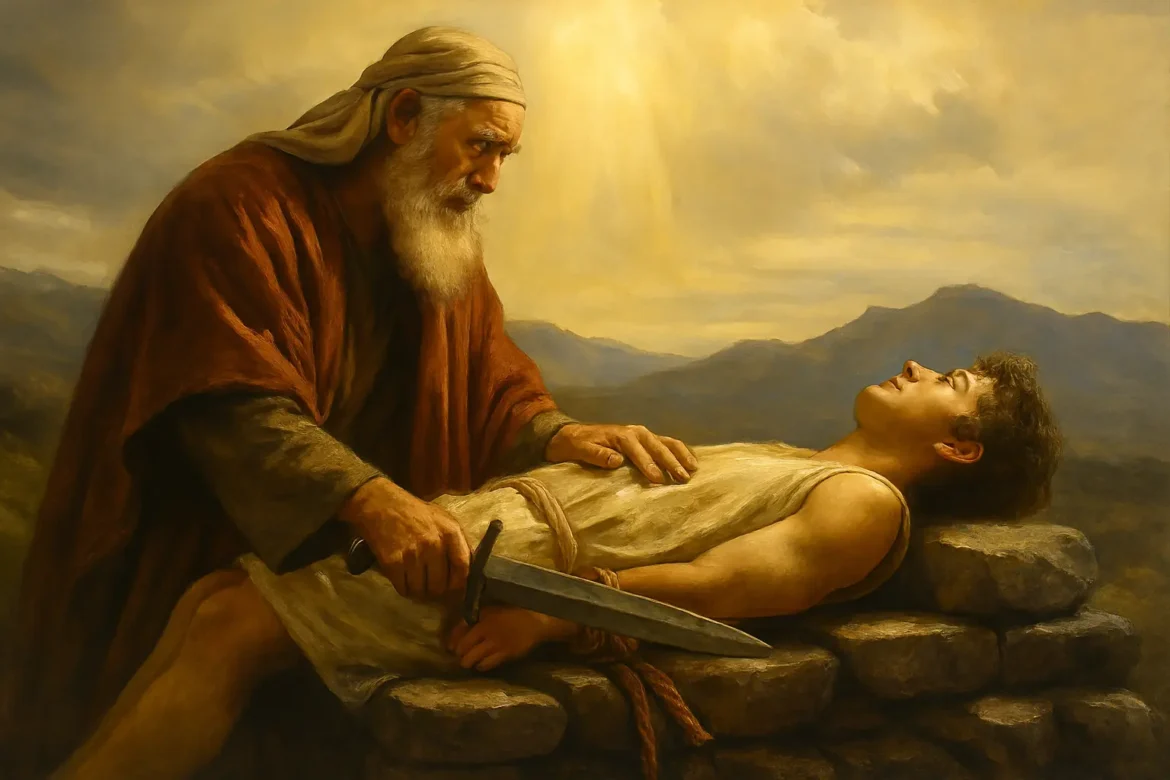
Abraham stretches out his hand, takes the knife to slay Isaac, and at that moment, the angel of the Lord intervenes.

“And the angel of the Lord called unto him out of heaven, and said, Abraham, Abraham: and he said, Here am I. And he said, Lay not thine hand upon the lad, neither do thou any thing unto him: for now I know that thou fearest God, seeing thou hast not withheld thy son, thine only son from me. And Abraham lifted up his eyes, and looked, and behold behind him a ram caught in a thicket by his horns: and Abraham went and took the ram, and offered him up for a burnt offering in the stead of his son.” (Genesis 22:11-13, KJV)

God provided a ram, and Abraham offered it as a burnt offering instead of his son. Abraham did not physically kill Isaac but sacrificed him in his heart, teaching that nothing should take God’s place in our lives.

Abraham’s Blessing

Abraham shows us that, if necessary, we must know how to receive and return to God. Returning is never easy, but God has His purposes. For not withholding his son, Abraham is greatly blessed.

“That in blessing I will bless thee, and in multiplying I will multiply thy seed as the stars of the heaven, and as the sand which is upon the sea shore; and thy seed shall possess the gate of his enemies; And in thy seed shall all the nations of the earth be blessed; because thou hast obeyed my voice. So Abraham returned unto his young men, and they rose up and went together to Beersheba; and Abraham dwelt at Beersheba.” (Genesis 22:17-19, KJV)

We must never refuse anything to God, for He often tests what we value most. Like Abraham, we must trust: if God asks, He will provide; if He promises, He will fulfill. If He asks for it back, He is testing our faith and fidelity.

Spread the message of faith to those who have not yet found God. If this content inspired you, we ask for two things:

  • Leave a comment to strengthen our faith.
  • Share on social media so more people can feel God’s power in their lives.
October 26, 2025 0 comments
0 FacebookTwitterPinterestEmail
Biblical Studies

Proverbs 22:6 – Parents and Children: Raising Under God’s Blessings

by Ministério Veredas Do IDE October 24, 2025
written by Ministério Veredas Do IDE

We are living in challenging times, where children, teenagers, and young people are constantly tempted by the enemy of our souls. This adversary acts in various ways, leading our children to experiment with and engage in the “pleasures” of sin through numerous influences. Our children and youth are immersed in a world of influencers who often undermine ethical and moral values.

However, as responsible adults, it is our duty to guide, educate, and protect this new generation. We must be examples of righteousness, love, and understanding, showing them the path of truth and kindness. It is essential to engage in open dialogue without judgment to understand their struggles and challenges, offering unconditional support and firm guidance. Together, we can strengthen family bonds and create a safe and welcoming environment where the light of hope and love prevails over the shadows of temptation.

The Challenge of Raising and Educating with Wisdom

Raising and educating a child today is undoubtedly a significant challenge. Through divine wisdom, we find valuable guidance to assist us in educating our children, teaching them that correction is an essential part of their lives. Let us reflect on the following verse:

Train up a child in the way he should go: and when he is old, he will not depart from it. (Proverbs 22:6, KJV)

A crucial aspect is educating our children from an early age, as the knowledge acquired in childhood will remain with them into adulthood. In this context, parents have the responsibility to dedicate themselves to teaching and disciplining their children in a way that pleases God.

The Importance of Teaching Spiritual Values

As parents, we must dedicate time to teaching our children the path to draw closer to God. Teaching spiritual values and encouraging this connection from an early age is fundamental to their development. Moreover, demonstrating love, compassion, and empathy through example strengthens these bonds. By sharing these teachings, we build a solid foundation of values that will accompany them throughout their lives. The power of example and spirituality cultivated within the family are essential.

In Hebrew, “to train” implies dedication. When we teach, we also learn. This act of sharing knowledge and experiences enriches not only the mind but also the soul. Therefore, in training, we cultivate a deep sense of connection and mutual growth. May we always teach with love and wisdom.

Teaching the Word of God

Promoting biblical teaching at home is essential to bring our children closer to God. Their unity and support in their relationship with God will protect them from the world’s evil influences. Teaching them to seek an intimate connection with God strengthens them against negative influences. It is not enough to take them to church or say that Jesus is good; we must guide them to a personal relationship with God.

From childhood, children should understand God’s love and experience meaningful spiritual moments. The story of Samuel illustrates this clearly:

And the Lord called Samuel: and he answered, Here am I. And he ran unto Eli, and said, Here am I; for thou calledst me. And he said, I called not; lie down again. And he went and lay down. And the Lord called yet again, Samuel. And Samuel arose and went to Eli, and said, Here am I; for thou didst call me. And he answered, I called not, my son; lie down again. Now Samuel did not yet know the Lord, neither was the word of the Lord yet revealed unto him. And the Lord called Samuel again the third time. And he arose and went to Eli, and said, Here am I; for thou didst call me. And Eli perceived that the Lord had called the child. Therefore Eli said unto Samuel, Go, lie down: and it shall be, if he call thee, that thou shalt say, Speak, Lord; for thy servant heareth. So Samuel went and lay down in his place. And the Lord came, and stood, and called as at other times, Samuel, Samuel. Then Samuel answered, Speak; for thy servant heareth. (1 Samuel 3:4-10, KJV)

Samuel only understood that God was speaking to him after being instructed by Eli. Our children will only draw closer to God when we teach them the way.

Correction with Love and Wisdom

Correction should occur whenever necessary, in a constructive and respectful manner, aiming for the child’s well-being. Clear and empathetic communication is essential to ensure correction is effective and contributes to growth. To err is human, and correcting is part of the process of growth.

He that spareth his rod hateth his son: but he that loveth him chasteneth him betimes. (Proverbs 13:24, KJV)

Foolishness is bound in the heart of a child; but the rod of correction shall drive it far from him. (Proverbs 22:15, KJV)

When applied with wisdom, love, and balance, correction helps the child understand that inappropriate behaviors have consequences. Parents must be attentive to their children’s behavior, using positive correction methods that promote healthy growth. Punishments should be proportional to the mistake, always aiming for learning and strengthening the family bond.

The rod and reproof give wisdom: but a child left to himself bringeth his mother to shame. (Proverbs 29:15, KJV)

Discipline is essential to prevent children from following harmful paths. Correction, when done with love, patience, and understanding, teaches without humiliating. Children need to feel safe to express their emotions, and parents should be examples of conduct and respect.

The Promise of Correction

Correct thy son, and he shall give thee rest; yea, he shall give delight unto thy soul. (Proverbs 29:17, KJV)

Correction brings peace to parents, as a well-guided child becomes an honorable person, bringing joy to the home. God also corrects us out of love:

For whom the Lord loveth he chasteneth, and scourgeth every son whom he receiveth. (Hebrews 12:6, KJV)

Now no chastening for the present seemeth to be joyous, but grievous: nevertheless afterward it yieldeth the peaceable fruit of righteousness unto them which are exercised thereby. (Hebrews 12:11, KJV)

Although correction may be difficult, it produces fruits of righteousness and life. Consistency is crucial: if parents promise consequences, they must follow through, so the child learns to respect rules and develop responsibility.

Following God’s Commandments

Teaching children to follow God’s commandments is essential to protect them from sin:

My son, if thou wilt receive my words, and hide my commandments with thee. (Proverbs 2:1, KJV)

My son, keep thy father’s commandment, and forsake not the law of thy mother: Bind them continually upon thine heart, and tie them about thy neck. When thou goest, it shall lead thee; when thou sleepest, it shall keep thee; and when thou awakest, it shall talk with thee. For the commandment is a lamp; and the law is light; and reproofs of instruction are the way of life. (Proverbs 6:20-23, KJV)

Discipline guides children toward life, helping them face challenges with consistency and determination. Teaching them to keep God’s word leads them to live wisely and justly.

Blessing Our Children

Children are blessings from the Lord:

Lo, children are an heritage of the Lord: and the fruit of the womb is his reward. (Psalm 127:3, KJV)

Our words have power. Blessing our children and speaking blessings over their lives is essential for them to be graced by God. Why not reflect on how many times today you blessed your child with words of encouragement, a hug, or a special moment? These gestures strengthen the relationship and show unconditional love.

Conclusion: A Commitment to Spiritual Education

God expects parents to commit to raising their children, guiding them toward His path. Children are a divine gift, and it is the parents’ responsibility to care for them with dedication, teaching them to depend on the Lord and live His commandments. May we bless them constantly, guide them with love, and prepare them for the purpose God has for them.

Did this message inspire you? Share it with friends, leave a comment, and may God bless your life!

October 24, 2025 0 comments
0 FacebookTwitterPinterestEmail
O poder da Oração
Biblical Studies

Prayer for Healing: Calling Upon God’s Power

by Ministério Veredas Do IDE October 24, 2025
written by Ministério Veredas Do IDE

May we cry out to God for His healing power. In this moment when we suffer from illnesses, it is essential to put our faith into action, asking God to intervene with His healing power in our lives.

I invite everyone to intercede with God using the simple words below.

A Prayer of Faith and Intercession

Almighty God, all-powerful, in this moment we unite our faith, coming into Your presence, Father. I pray now for this person facing illness.

God, intervene with Your power to heal them now!

Lord, visit this heart, heal this cancer, depression, sadness, pain. Heal every illness now, in the name of the Lord Jesus. Pour out Your healing and refreshment upon this person, in Jesus’ name. Amen.

| And whatsoever ye shall ask in my name, that will I do, that the Father may be glorified in the Son. If ye shall ask any thing in my name, I will do it. (John 14:13-14, KJV)

Reflection: The Strength of Faith in Healing

The prayer for healing is an act of trust in God’s love and power. As John 14:13-14 teaches us, when we pray with faith, we are invited to believe that God hears our pleas. Why not join your voice to this prayer and trust in the restoration that comes from above? Keep seeking God with faith, for He is the Great Physician.

October 24, 2025 0 comments
0 FacebookTwitterPinterestEmail
Newer Posts
Older Posts

Novidades Edificantes

  • Who Was Ishmael in the Bible?
  • The Many Afflictions of the Righteous and the Deliverance of the Lord
  • Who Is Jesus Christ? John 3:16-18
  • Why Did Pharaoh Order the Killing of the Hebrew Firstborns?
  • How Was David Chosen to Be King? (1 Samuel 16)

Follow Us

Facebook Twitter Instagram Youtube

Edifique Sua Vida!

  • Who Was Ishmael in the Bible?

    December 19, 2025
  • The Many Afflictions of the Righteous and the Deliverance of the Lord

    December 19, 2025
  • Who Is Jesus Christ? John 3:16-18

    December 19, 2025
  • Why Did Pharaoh Order the Killing of the Hebrew Firstborns?

    December 19, 2025
  • How Was David Chosen to Be King? (1 Samuel 16)

    December 9, 2025
Veredas Do IDE
Subscribe Youtube
    • Estudos Bíblicos
    • Esboços De Pregação
    • Devocional Diário
    • Motivacional Bíblico
    • Personagens Bíblicos
    • Perguntas e Respostas Bíblicas
    • Quem Somos
    • Termos De Uso
    • Politica de Privacidade

Nossas Redes Sociais

Facebook Twitter Instagram Youtube Medium

2016 / 2025 –  Todos os Direitos Reservados ao Ministério Veredas Do IDE. 

Ministério Veredas Do IDE
  • Home
  • ConfiraHOT
  • Devocional Diário
  • Motivacional
  • Perguntas e Respostas
  • English
    • English
    • Español
    • Português
Ministério Veredas Do IDE
  • Home
  • ConfiraHOT
  • Devocional Diário
  • Motivacional
  • Perguntas e Respostas
  • English
    • English
    • Español
    • Português
@2016 / 2025 - All Right Reserved. Todos os Direitos Reservados ao Ministério Veredas Do IDE Veredas Do IDE